
India feeds 1.4 billion people. By 2030, that number crosses 1.5 billion and the land available to grow food is shrinking, not expanding.
Every year, Indian farmers lose crops worth USD 10–15 billion to insects, weeds, and fungal diseases. That is not a statistic. That is the income, livelihood, and food security of millions of farming families – wiped out not by drought or floods, but by preventable biological threats.
The solution lies at the intersection of two powerful forces: science-backed agrochemical innovation and sustainable farming practices.
In 2026, sustainable agrochemicals — products designed to deliver maximum crop protection with minimum ecological footprint — are no longer a future concept. They are the present reality shaping India’s agriculture, from the paddy fields of Punjab to the cotton belts of Vidarbha.
This guide by MaxxGro Agrology Limited, one of India’s most trusted agrochemical companies, explains exactly what is changing, why it matters, and how Indian farmers and agribusinesses can benefit.
What Are Sustainable Agrochemicals?
Sustainable agrochemicals are crop protection and crop enhancement chemicals – including herbicides, fungicides, insecticides, and plant growth regulators — that are scientifically formulated for high efficacy against target pests, weeds, or diseases, while being environmentally responsible with lower soil persistence, reduced eco-toxicity, and improved biodegradability.
In simple terms: sustainable agrochemicals do more with less — more crop protection, less chemical load on the environment.
Top 7 Trending Topics in Sustainable Agrochemicals India 2026
1. Herbicides: India’s Fastest-Growing Agrochemical Segment
Herbicides are now the single most explosive growth area in Indian agrochemicals and the reason is simple: labour.
Rural India is facing an acute agricultural labour shortage. Manual weeding of one acre of land takes 8–10 hours of labour. As rural workers migrate to cities, farmers simply cannot find or afford enough labourers to weed their fields at the right time.
The result? Crop losses from uncontrolled weed growth — and a surging demand for effective, crop-safe herbicide solutions.
Weeds compete with crops for water, nutrients, and sunlight. Uncontrolled weeds can cause yield losses of 20–80% depending on the crop, while herbicide application is 5–8x more cost-effective than manual weeding.
When choosing a quality herbicide, look for crop-selective action that kills weeds without harming your crop, proven rainfastness for Indian monsoon conditions, and residue compliance with FSSAI and export norms.
MaxxGro’s herbicide range is engineered for India’s most challenging weed problems — in rice, wheat, and other key crops — combining efficacy with environmental safety.
2. Fungicides: The Climate Change Frontline
India’s changing climate — wetter monsoons, unpredictable temperatures, and higher humidity is creating perfect breeding conditions for fungal diseases in crops. Blast in rice, downy mildew in grapes, early blight in tomatoes, and yellow rust in wheat are no longer rare occurrences. They are seasonal certainties.
Fungal diseases now cause an estimated 20–25% annual yield loss in susceptible crops.
The global fungicide market is innovating rapidly and Indian farmers are benefiting from systemic fungicides that work from within the plant, protectant and curative combinations for broader disease windows, new-generation triazoles and strobilurins with longer residual activity, and reduced-dose formulations that lower cost per acre.
Key diseases driving fungicide demand in India in 2026 include rice blast and sheath blight during the Kharif season, powdery mildew in wheat and cucurbits, Alternaria blight in potato and mustard, and Cercospora leaf spot in soybean.
All fungicides used in Indian agriculture must be registered under the Insecticides Act, 1968 with the Central Insecticides Board & Registration Committee (CIBRC). MaxxGro only markets CIBRC-registered crop protection products.
3. Insecticides: The Evolving Battle Against Resistance
For decades, Indian farmers have relied heavily on broad-spectrum insecticides. The result? Insecticide resistance – a growing crisis where target pests develop immunity to commonly used molecules.
The 2026 trend is a decisive shift toward novel-mode-of-action molecules that bypass resistance, selective insecticides that spare beneficial insects especially pollinators, nano-encapsulation technology for controlled release and reduced leaching, and systemic insecticides for sucking pests like whitefly, thrips, and aphids.
India’s most economically damaging pests right now include the Brown Plant Hopper in rice causing losses of over ₹3,500 crore annually, Pink Bollworm in cotton at ₹2,800 crore, Helicoverpa across multiple crops at ₹2,000 crore, Whitefly in cotton and chilli at ₹1,600 crore, and Fall Armyworm in maize at ₹1,200 crore.
The answer is not more insecticide — it is smarter insecticide. Products with proven systemic action, lower application rates, and integrated resistance management protocols are the future.
4. Plant Growth Regulators (PGRs): The Silent Yield Booster
PGRs remain the most underutilised tool in the Indian farmer’s crop protection toolkit — and that is rapidly changing in 2026.
Plant Growth Regulators are chemical compounds that regulate plant growth, development, and response to stress. They can accelerate root development for better nutrient uptake, improve flowering and fruit set, prevent pre-harvest fruit drop, enhance drought and stress tolerance, and improve uniformity of crop maturity.
PGR adoption is surging because precision agriculture is helping farmers understand crop physiology better, and PGRs like ethephon, gibberellins, and cytokinins are now proven in Indian field conditions — with outcomes showing 10–30% yield improvement in treated crops with no additional land use.
PGRs work best when crops are healthy and nutritional needs are met. Combine PGR use with proper soil nutrition and disease-free crop management for maximum ROI.
5. Integrated Pest Management (IPM): The Gold Standard in 2026
Integrated Pest Management (IPM) is the scientifically recommended framework for crop protection that combines multiple strategies – biological, cultural, physical, and chemical — to manage pests sustainably.
India’s National Pest Surveillance System (NPSS), powered by AI and geospatial data, now provides district-level pest forecasts and real-time advisories to farmers, enabling precise and timely application of agrochemicals.
IPM in Indian agriculture rests on four pillars. The first is Monitoring and Thresholds — scouting fields regularly and applying chemicals only when pest populations cross economic threshold levels (ETLs). The second is Cultural Controls — crop rotation, resistant varieties, seed treatment, and proper irrigation scheduling. The third is Biological Controls — using beneficial insects such as Trichogramma and biopesticides like Bt and Beauveria. The fourth is Chemical Controls — targeted use of registered agrochemicals as a last line of defence.
IPM is a sustainable crop protection approach that uses multiple pest control methods to minimise economic damage to crops while reducing risks to human health, beneficial organisms, and the environment. Chemical pesticides are used within IPM, but only when monitoring indicates they are needed and in a manner that minimises risks.
6. Precision Agriculture & Smart Application: Technology Meets Agrochemicals
One of 2026’s most significant agriculture trends is the fusion of digital technology with agrochemical application.
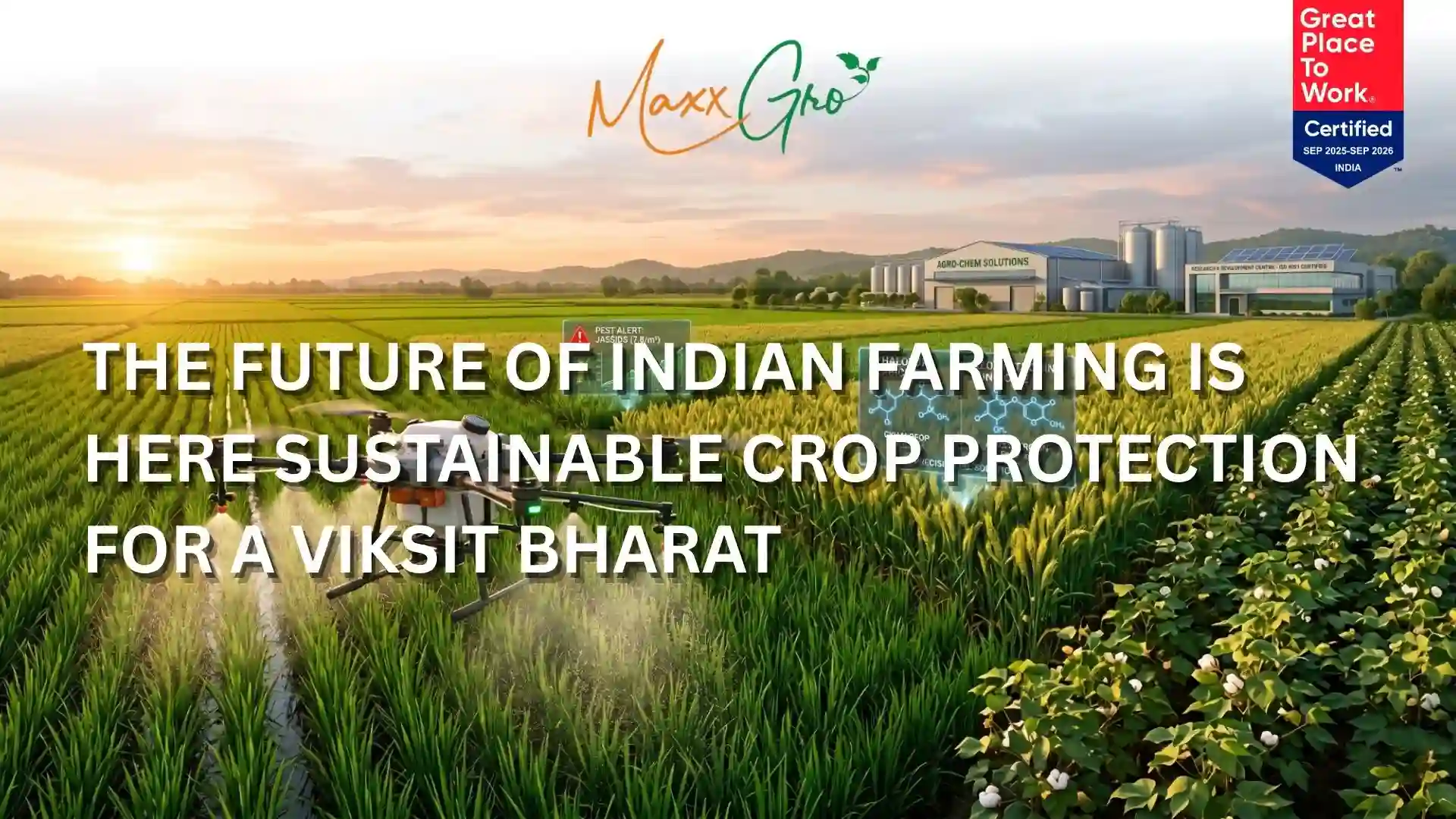
Drone-based spraying reduces chemical use by 30–40% through precision targeting. AI-powered crop monitoring apps detect disease and pest symptoms early, before damage spreads. Variable-rate application systems adjust chemical doses based on real-time field data. IoT-connected weather stations help farmers time applications perfectly.
This is not the future. This is happening now – on farms across Haryana, Punjab, Andhra Pradesh, and Maharashtra.
Precision application means fewer sprays needed over a season, reduced drift and off-target contamination, better residue management for export crops, and a higher return on agrochemical investment.
7. Bio-Based & Next-Generation Agrochemistry: The Green Revolution 2.0
Perhaps the most transformative trend of all is the rise of bio-based and newer-chemistry agrochemicals designed to deliver crop protection that is simultaneously effective and environmentally responsible.
Newer chemistry in agrochemicals means molecules with lower lethal dose (LD50) values, reduced soil persistence through faster biodegradation, greater target specificity with lower non-target toxicity, and improved formulation technology including suspoemulsions, wettable granules, and nano-formulations.
Bio-stimulants and biopesticides are complementing — not replacing — conventional agrochemicals, creating integrated product systems that reduce chemical load while maintaining yield protection.
India’s government is actively supporting this transition through the promotion of IPM-based crop protection under the National Food Security Mission, subsidies and incentives for bio-fertiliser and biopesticide adoption, and stringent review of high-risk molecules in the CIBRC re-registration process.
How to Choose the Right Agrochemical: A Farmer’s Framework
Choosing the wrong product at the wrong time is one of the most common and costly mistakes in Indian farming. Here is a practical decision framework every farmer should follow.
Step 1 — Correct Identification: Identify the pest, weed, or disease accurately before doing anything else. Misidentification leads to wrong product selection and zero efficacy. When in doubt, consult a certified agronomist or contact your agrochemical company’s helpline.
Step 2 — Check Registration: Only use products registered for that specific crop-pest combination under the Insecticides Act, 1968. Unregistered use is both illegal and potentially harmful.
Step 3 — Economic Threshold: Apply only when pest populations exceed the Economic Threshold Level (ETL). Not every pest sighting requires a spray.
Step 4 — Select the Right Mode of Action: For existing pest problems, use systemic formulations. For preventive protection, consider protectant chemistry. Rotate modes of action across seasons to prevent resistance buildup.
Step 5 — Follow the Label: Dosage, timing, safety interval before harvest (PHI), and dilution instructions on the product label are legally mandated and scientifically validated. Follow them precisely.
Step 6 — Safety First: Wear appropriate PPE — gloves, mask, and protective clothing. Store agrochemicals safely, away from food, water, and children.
The MaxxGro Advantage: Science-Backed, Farmer-First Agrochemicals
MaxxGro Agrology Limited, founded in 2018 and headquartered in Gurugram, Haryana, has built its reputation on a simple belief: every Indian farmer deserves access to the best crop protection science, at a price that makes economic sense.
Our in-house R&D Centre continuously develops newer chemistry validated under real Indian field conditions. Our ISO-certified manufacturing facility in Sonipat, Haryana ensures consistent quality in every product we make. Our full-spectrum portfolio — herbicides, fungicides, insecticides, and plant growth regulators – means farmers get a complete crop protection solution from a single trusted partner.
With 112+ distributors and over 1,000 farmer channels spread across India, our PAN India distribution network ensures that genuine MaxxGro crop protection products reach even the most remote agricultural regions — on time and with full technical backup. Our farmer-friendly pricing ensures that the best agrochemical science is accessible to every level of the agricultural supply chain.
At MaxxGro, sustainability is not a slogan. It is the foundation of our commitment to IPM-aligned formulations, eco-friendly chemistry, and soil health preservation — because a Viksit Fasal today must leave behind a Viksit Zameen for tomorrow.
What are the main types of agrochemicals used in India?
The main types of agrochemicals used in India are insecticides, fungicides, herbicides, plant growth regulators (PGRs), and fertilisers. In India, insecticides hold the largest market share at approximately 41%, while herbicides are the fastest-growing segment growing at 10% CAGR.
Which agrochemical is best for rice or paddy crop?
Rice crops commonly require fungicides for blast and sheath blight management, insecticides for brown plant hopper, stem borer, and leaf folder control, and herbicides for weed management during transplanting and early growth stages. The specific product and dose depend on the rice variety, season, local pest pressure, and growth stage.
Are agrochemicals safe for sustainable farming?
Yes, when used correctly, modern agrochemicals are fully compatible with sustainable farming. Sustainable agrochemicals are formulated with lower toxicity, better biodegradability, and higher target specificity. When used as part of an Integrated Pest Management approach — with correct identification, economic threshold monitoring, and adherence to label instructions — agrochemicals enhance productivity while minimising environmental impact.
What is the difference between a systemic and a contact insecticide?
A contact insecticide kills insects on direct physical contact with the chemical — it does not get absorbed into the plant. A systemic insecticide is absorbed by the plant and moves through its tissues, killing insects that feed on any part of the plant. Systemic insecticides are especially effective for sucking pests like whitefly, aphids, and thrips.
What is a Plant Growth Regulator (PGR)?
A Plant Growth Regulator is a chemical compound – either synthetic or naturally derived – that influences plant growth and developmental processes including germination, root formation, flowering, fruit set, and ripening. PGRs do not kill pests; they enhance the plant’s own biological processes. Common PGRs used in India include ethephon for fruit ripening, gibberellic acid for yield improvement, and cytokinins for root and shoot development.
How is the agrochemical market in India expected to grow?
India’s agrochemical market, valued at approximately USD 8.22–9.6 billion in 2025–26, is projected to grow to USD 11.76–13.25 billion by 2030–31 at a CAGR of approximately 7–11.8%. The growth is driven by rising food demand, climate-induced pest pressure, labour shortages boosting herbicide adoption, and increasing precision agriculture adoption across India.
What are the best agrochemicals for Kharif crops in India?
For rice — systemic fungicides for blast, broad-spectrum insecticides for BPH and stem borer, and pre-emergence herbicides. For cotton — insecticides for bollworm, whitefly, and thrips, along with fungicides for leaf curl and blight. For maize — insecticides for fall armyworm and foliar fungicides for turcicum blight. For soybean — fungicides for stem rot and yellow mosaic, and insecticides for semilooper and whitefly. Always verify product registration and dosage with your agrochemical company before application.
Conclusion: Sustainable Agrochemicals Are Not Optional – They Are Inevitable
The Indian farmer of 2026 faces a perfect storm: climate volatility, labour scarcity, rising input costs, and global quality standards for produce. The only viable path forward is one that combines agrochemical science with sustainable practices.
Sustainable agrochemicals – responsibly formulated, correctly applied, supported by IPM frameworks and digital precision tools – are not a threat to Indian agriculture. They are its lifeline.
The question is not whether Indian farmers should use agrochemicals. The question is: which agrochemicals, applied how, to achieve what outcome – for the crop, for the farmer’s income, and for the soil that future generations will inherit.
At MaxxGro Agrology Limited, we believe the answer lies in science, in farmer education, and in a relentless commitment to sustainable progress. That is what we build every day – from our R&D centre in Haryana to over 1,000 farmer touchpoints across India.