
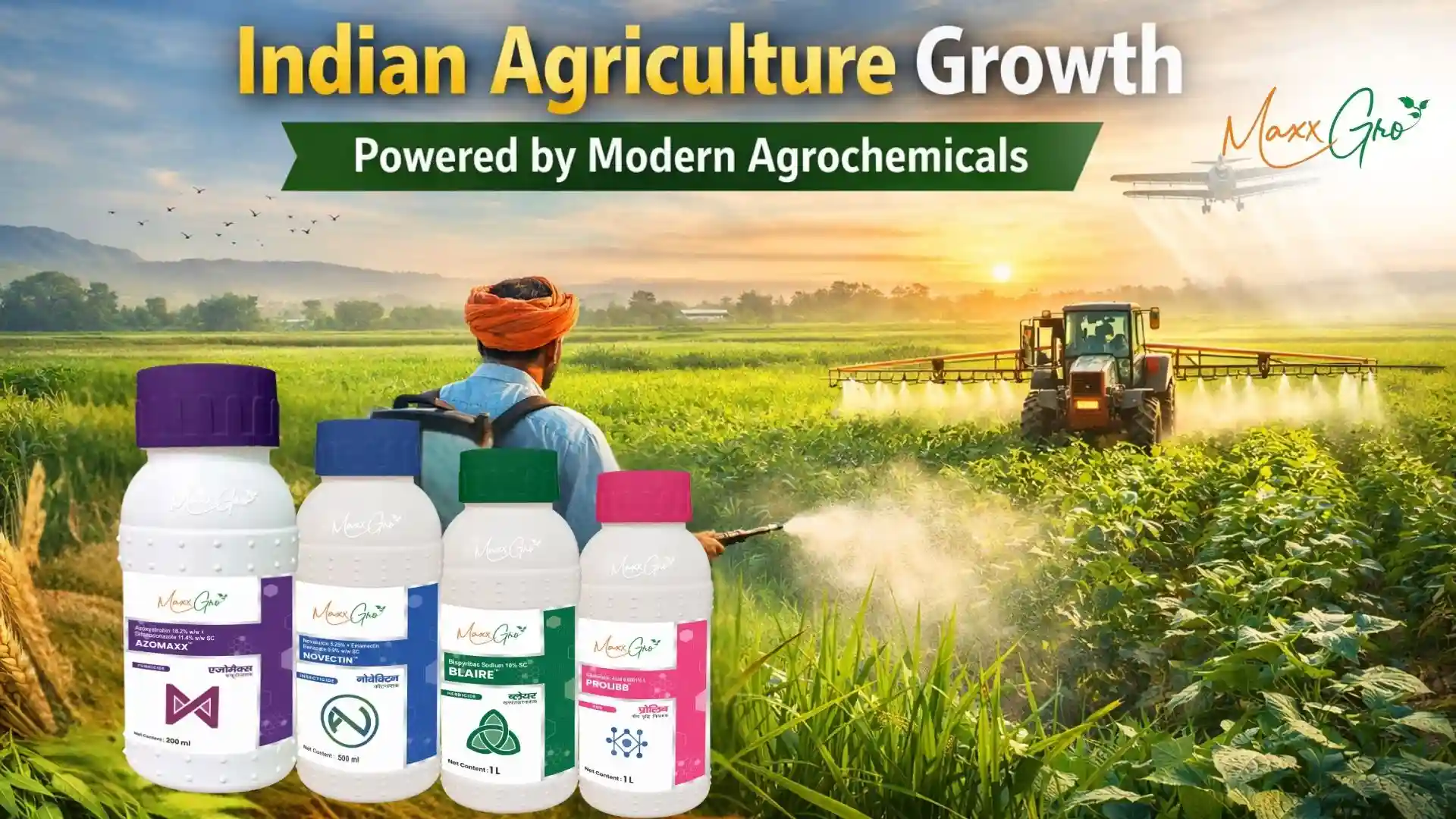
The New Era of Indian Agriculture
Indian agriculture is entering a high-performance phase driven by technology, scientific crop management, and advanced agrochemical solutions. As food demand rises and arable land remains limited, farmers must produce more from every acre while maintaining crop quality and profitability.
Modern Indian agriculture is no longer dependent solely on traditional practices. Instead, it is evolving into a data-informed, productivity-focused ecosystem where crop protection products, plant health solutions, and technical agrochemicals play a decisive role.
Herbicides, fungicides, insecticides, plant growth regulators, and bulk agrochemical products have become essential tools for reducing crop risk, improving yields, and enabling scalable farming operations.
For distributors, agribusiness leaders, and progressive farmers, adopting advanced crop protection strategies is no longer optional — it is a competitive necessity.
Current Landscape of Indian Agriculture
Indian agriculture supports millions of livelihoods and contributes significantly to economic stability. However, the sector faces increasing pressure from:
- Growing population demand
- Climate variability
- Pest resistance
- Soil health challenges
- Rising labor costs
To overcome these constraints, farms are shifting toward integrated crop management systems that prioritize efficiency, predictability, and yield optimization.
This transformation is accelerating the demand for high-quality agrochemicals capable of protecting crops while supporting sustainable farming practices.
The future of Indian agriculture depends on productivity per hectare — not expansion of farmland.
Why Crop Protection Is Critical in Indian Agriculture
Crop losses remain one of the biggest threats to farm profitability. Without proper protection, farmers risk losing both output and investment.
Common yield disruptors include:
- Weed competition reducing nutrient uptake
- Fungal outbreaks damaging crop quality
- Pest infestations destroying standing crops
- Environmental stress slowing plant development
Advanced agrochemical solutions create a protective shield around crops, ensuring consistent growth cycles and market-ready produce.
Crop protection is one of the highest ROI investments in modern farming.
Types of Agrochemicals Powering Indian Agriculture
1. Herbicides: Driving Field Efficiency
Weeds compete aggressively with crops for water, sunlight, and nutrients. Manual removal is expensive and time-consuming, especially as labor availability declines.
Benefits of Herbicides:
- Early-stage weed control
- Reduced labor dependency
- Improved soil nutrient utilization
- Higher crop productivity
- Better field uniformity
Herbicides are rapidly becoming a cornerstone of large-scale Indian agriculture by enabling farmers to manage acreage more efficiently.
👉 Explore our Agrochemical Products to improve field performance.
2. Fungicides: Protecting Yield Quality
India’s diverse climate conditions often create ideal environments for fungal diseases that can spread quickly across fields.
High-performance fungicides help farmers:
- Prevent disease outbreaks
- Maintain export-grade crop quality
- Extend shelf life
- Reduce post-harvest losses
- Protect high-value crops
For commercial farming, fungicides directly influence revenue by safeguarding both yield volume and visual quality.
👉 Discover our Fungicide Solutions designed for reliable crop protection.
3. Insecticides: Securing Farmer Investment
Pest attacks remain unpredictable and can cause severe economic damage within days.
Modern insecticides provide targeted protection that helps farmers maintain stable production cycles.
Key Advantages:
- Fast pest control
- Long-lasting protection
- Reduced crop damage
- Improved harvest predictability
- Enhanced resistance management
As Indian agriculture becomes more commercialized, insecticides are essential for minimizing risk.
👉 View our Insecticide Range built for modern farming needs.
4. Plant Growth Regulators: Maximizing Crop Potential
Plant Growth Regulators (PGRs) are among the fastest-growing segments in Indian agriculture because they directly enhance plant physiology.
PGR Benefits Include:
- Stronger root development
- Uniform crop growth
- Improved flowering and fruit setting
- Greater stress tolerance
- Higher yield consistency
Rather than expanding farmland, progressive farmers are using PGRs to extract maximum productivity from existing acreage.
👉 Learn more about our Plant Growth Regulators for advanced crop performance.
5. Technical and Bulk Agrochemicals: Strengthening the Supply Chain
Behind every successful formulation lies dependable technical-grade chemistry.
Reliable bulk agrochemical supply ensures:
- Consistent formulation quality
- Scalable manufacturing
- Regulatory compliance
- Cost efficiency for partners
- Stable distribution networks
Maxxgro Agrology Limited is capable of delivering both formulations and technical products create stronger value chains across Indian agriculture.
👉 Explore our Technical and Bulk Agrochemical.
Major Trends Shaping Indian Agriculture
Shift Toward Yield Optimization
With limited land availability, increasing output per acre has become the primary growth strategy.
This is accelerating adoption of:
- Preventive crop protection
- Advanced herbicide programs
- Integrated pest management
- Growth-enhancing regulators
Rise of Commercial Farming
Farmers are increasingly operating like entrepreneurs — analyzing cost vs. return before every input decision.
This shift favors science-backed agrochemical solutions that deliver measurable results.
Export-Oriented Production
Global markets demand consistency, quality, and compliance.
Effective crop protection helps farmers achieve:
- Disease-free produce
- Uniform crop size
- Better visual appeal
- Improved storage stability
Climate-Smart Agriculture
Erratic rainfall, heatwaves, and changing pest cycles require proactive crop strategies.
Agrochemicals designed for stress resistance and recovery are becoming core tools in climate-resilient Indian agriculture.
Integrated Crop Protection: The Future of Indian Agriculture
The next phase of Indian agriculture will be defined by integrated solutions rather than single-product usage.
A holistic protection strategy includes:
- Herbicides for early field control
- Fungicides for preventive defense
- Insecticides for pest management
- Plant growth regulators for yield optimization
Farms implementing integrated programs consistently outperform reactive farming models.
Preventive protection always costs less than crop recovery.
Why Choosing the Right Agrochemical Partner Matters
Product reliability directly impacts farm outcomes. Distributors and buyers increasingly prefer partners who offer:
- Proven formulation expertise
- Consistent technical quality
- Broad product portfolio
- Scalable bulk supply
- Strong partner support
A trusted supplier becomes more than a vendor — they become a long-term growth partner.
👉 Learn more About Us and our commitment to agricultural innovation.
Opportunities Ahead for Indian Agriculture
The outlook for Indian agriculture remains exceptionally strong as the sector moves toward technology-driven farming.
High-growth areas include:
- Specialty crop protection products
- Precision agriculture
- Combination formulations
- Residue-compliant chemistry
- Sustainable growth stimulants
Organizations aligned with these trends will lead the next decade of agricultural expansion.
Upgrade Crop Performance with Advanced Agrochemical Solutions
Partner with a trusted agrochemical provider delivering high-performance herbicides, fungicides, insecticides, plant growth regulators, and technical products tailored for modern Indian agriculture.
👉 Explore Our Product Portfolio
👉 View Crop Protection Solutions
Become a Distribution Partner
Expand your business with a reliable agrochemical manufacturer offering consistent quality, scalable bulk supply, and strong partner support across domestic and global markets.
👉 Request Bulk Pricing
👉 Partner With Us
👉 Contact Our Sales Team
Looking for Bulk Agrochemicals?
Connect with our experts to discuss customized supply programs aligned with your crop, geography, and volume requirements.
The Road Ahead
Indian agriculture is transitioning toward a future defined by efficiency, sustainability, and scientific crop management. As productivity pressures increase, advanced agrochemical solutions will remain central to achieving higher yields while protecting farm profitability.
Businesses investing in innovation, quality formulations, and farmer-centric technologies will help shape a resilient and globally competitive agricultural ecosystem.
Conclusion
Indian agriculture stands at the intersection of tradition and innovation. Feeding a growing population while ensuring farmer prosperity requires dependable crop protection and plant health solutions.
Herbicides, fungicides, insecticides, plant growth regulators, and technical agrochemicals are no longer optional inputs — they are strategic enablers of agricultural progress.
Maxxgro Agrology Limited committed to delivering high-performance agrochemical solutions will play a defining role in building a more productive, sustainable, and future-ready agricultural landscape.
Backed by industry expertise, advanced formulation capabilities, and a commitment to quality, Maxxgro supports Indian agriculture with reliable crop protection technologies designed for sustainable farm growth.
What role do agrochemicals play in Indian agriculture?
Agrochemicals protect crops from weeds, pests, and diseases while improving yield quality and consistency, making them essential for modern farming.
Which agrochemicals are most commonly used in Indian agriculture?
Herbicides, fungicides, insecticides, and plant growth regulators are widely used to enhance crop protection and productivity.
Why is crop protection important for modern farming?
Crop protection reduces losses, improves produce quality, and ensures predictable harvests, helping farmers achieve better profitability.
How do plant growth regulators improve yields?
They enhance root strength, regulate plant development, improve flowering, and increase overall harvest consistency.
What should distributors look for in an agrochemical supplier?
Reliable quality, technical expertise, regulatory compliance, scalable supply, and a diverse product portfolio are critical factors.