
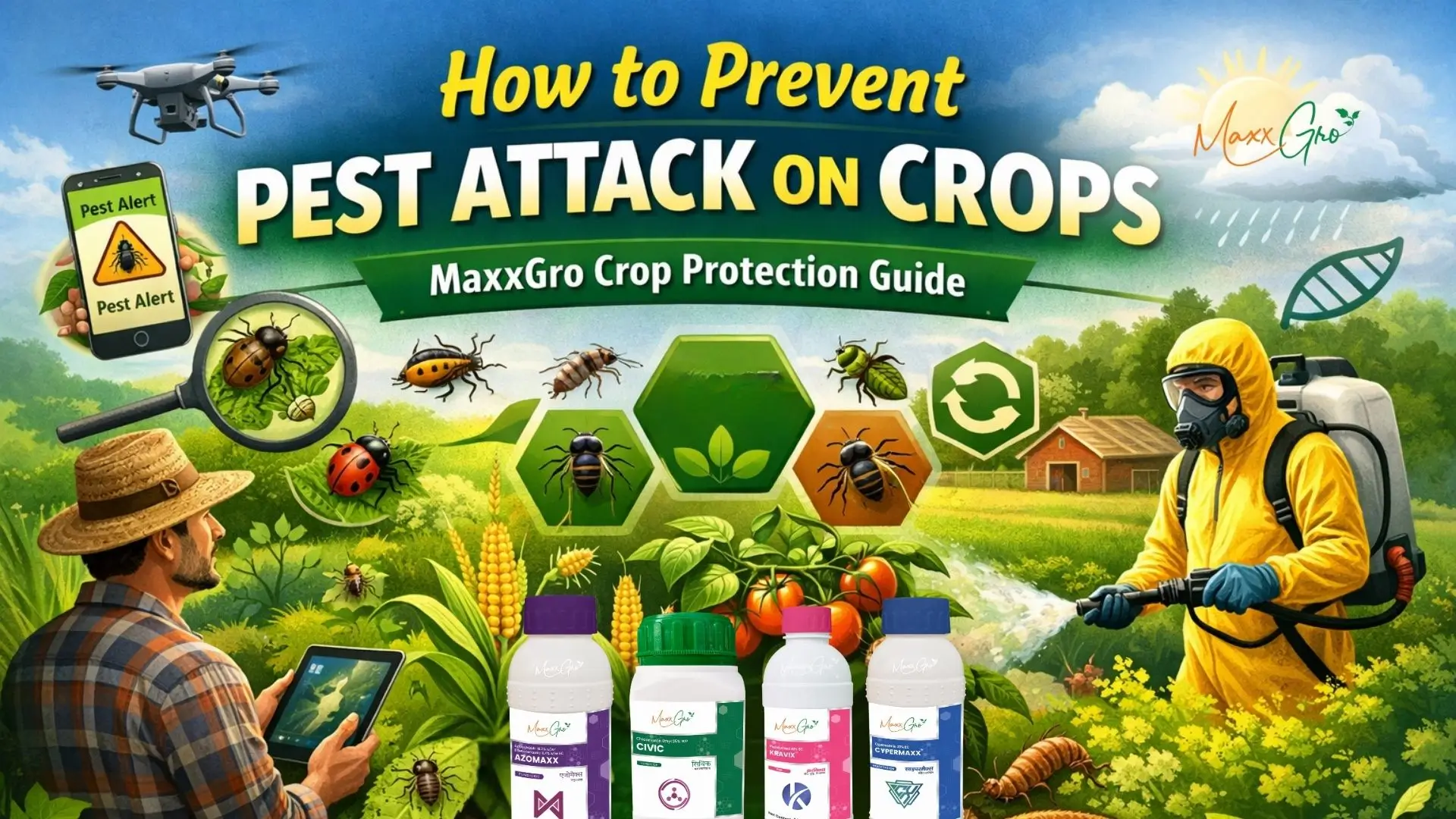
Pest attack is one of the most critical challenges in modern agriculture. Insects, fungi, and other crop pests can cause severe yield losses if not managed at the right time. Understanding how to prevent pest attack on crops is essential for farmers, agri-enterprises, and input suppliers aiming to achieve higher productivity and sustainable farming outcomes.
At MaxxGro Agrology, we specialize in developing and supplying high-quality agrochemical solutions that help farmers prevent pest infestations before they cause economic damage. This guide explains practical, field-tested, and science-based approaches to crop protection, combining preventive farming practices with precise agrochemical use.
Why Preventing Pest Attack Is Critical in Agriculture
Preventive pest management is more cost-effective and sustainable than reactive control.
Key Benefits
- Reduces yield loss and quality damage
- Minimizes excessive pesticide usage
- Improves crop resilience and growth
- Enhances return on investment (ROI)
- Supports long-term soil and ecosystem health
A well-planned strategy on how to prevent pest attack on crops protects both yield and profitability.
Major Causes of Pest Attack on Crops
Pest outbreaks are often triggered by avoidable agronomic factors:
- Continuous monocropping
- Excessive nitrogen fertilization
- Poor field hygiene and weed growth
- Irregular irrigation practices
- Lack of timely crop monitoring
- Favorable climatic conditions
Identifying these factors early allows farmers to design stronger preventive programs.
Early Identification: First Step to Prevent Pest Attack on Crops
Early detection plays a decisive role in preventing pest damage.
Common Early Symptoms
- Chewed or skeletonized leaves
- Yellowing, curling, or stunted growth
- Sticky honeydew secretion
- Presence of larvae, eggs, or fungal spots
Regular field scouting enables timely intervention before pest populations cross economic thresholds.
Cultural Practices to Prevent Pest Attack on Crops
Cultural methods are the foundation of preventive pest management.
1. Crop Rotation
- Breaks pest and disease life cycles
- Reduces soil-borne pest buildup
2. Field Sanitation
- Remove crop residues after harvest
- Eliminate weeds that act as pest hosts
3. Balanced Nutrition
- Soil-test-based fertilization
- Avoid excess nitrogen, which attracts sucking pests
4. Proper Spacing and Irrigation
- Improves air circulation
- Reduces humidity-related disease pressure
These practices significantly reduce pest incidence when implemented consistently.
Role of Agrochemicals in Preventing Pest Attack on Crops
While cultural and biological methods reduce pest pressure, agrochemicals are essential when preventive thresholds are crossed.
At MaxxGro Agrology, our crop protection portfolio focuses on target-specific insecticides and fungicides designed for preventive and early-stage pest management. Using the right agrochemical at the right time ensures pests are controlled before irreversible crop damage occurs.
Preventive Use of Insecticides and Fungicides
Insecticide Strategy
- Apply systemic insecticides during early crop stages
- Rotate modes of action (MoA) to prevent resistance
- Prefer modern formulations like SC, SL, WG for better coverage and safety
Fungicide Strategy
- Use protectant fungicides before disease-favorable weather
- Combine systemic + contact fungicides for broad-spectrum protection
- Focus on preventive sprays during high humidity and rainfall periods
This structured approach improves control efficiency and reduces repeated applications.
Technical vs Bulk (Formulation) Agrochemicals: Why Formulation Matters
Effective pest prevention depends not only on the active ingredient but also on the formulation.
| Type | Purpose |
|---|---|
| Technical | Raw material used in manufacturing |
| Bulk (EC, SC, SL, WP, WG) | Crop-safe, ready-to-use products |
MaxxGro formulations are developed to ensure:
- Uniform spray distribution
- Improved leaf adhesion
- Reduced phytotoxicity
- Consistent field performance
High-quality formulations enhance the effectiveness of pest management programs.
Integrated Pest Management (IPM) with Agrochemical Precision
IPM is the most recommended framework to prevent pest attack on crops sustainably.
MaxxGro-Aligned IPM Approach
- Regular crop monitoring
- Cultural and biological controls
- Threshold-based agrochemical application
- Rotation of insecticide and fungicide groups
This approach protects beneficial insects while maintaining effective pest control.
Weather-Based Pest Prevention Strategy
Climatic conditions strongly influence pest and disease development.
- High humidity → fungal diseases
- Dry and hot conditions → mites and sucking pests
- Sudden temperature changes → pest flare-ups
Using weather forecasts helps farmers schedule preventive sprays more accurately and reduce losses.
Use of Pest-Resistant Crop Varieties
Pest-tolerant varieties reduce overall infestation pressure and dependence on chemicals. When combined with preventive agrochemical programs, resistant varieties deliver stable yields with lower risk.
Modern Tools for Smarter Pest Prevention
Technology supports proactive pest management:
- Mobile pest alert systems
- Drone-based crop scouting
- AI-driven pest prediction models
- Soil and climate sensors
These tools allow early decision-making and precise application of crop protection inputs.
Common Mistakes to Avoid
To successfully implement strategies on how to prevent pest attack on crops, avoid:
- Delayed pest detection
- Random or excessive pesticide use
- Ignoring resistance management
- Using incorrect dosage or timing
Preventive pest control requires discipline and consistency.
Conclusion
Understanding how to prevent pest attack on crops is essential for sustainable and profitable agriculture. By integrating cultural practices, IPM principles, and precision agrochemical solutions, farmers can significantly reduce crop losses and input costs.
At MaxxGro Agrology, we are committed to delivering science-driven, quality-controlled agrochemical solutions that help farmers, dealers, and agribusinesses protect crops efficiently and responsibly.
Get crop-specific insecticide and fungicide recommendations from MaxxGro experts.
Looking for a reliable agrochemical manufacturer or bulk supplier? Partner with MaxxGro Agrology.