
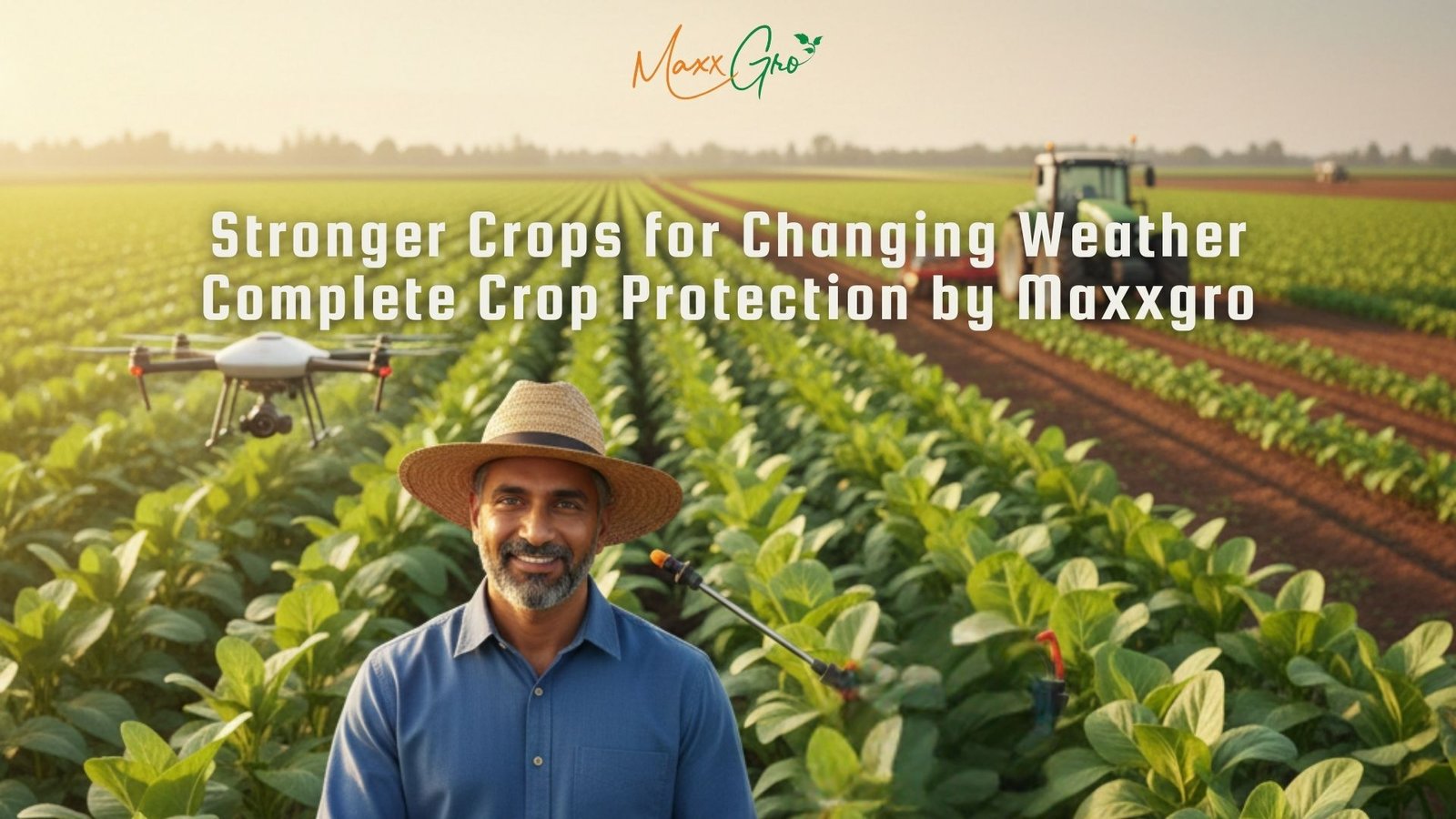
Indian farming is changing fast. With more than 140 million farmers feeding over 1.4 billion people, agriculture must now deal with irregular rainfall, long dry periods, and rising temperatures. These challenges are making traditional farming methods less reliable.
This is why Climate-Smart Agriculture Practices India are becoming essential. These practices help farmers protect their crops, use water wisely, and maintain steady yields despite climate changes.
At MaxxGro Agrology Limited, we support farmers with reliable insecticides, fungicides, herbicides, and plant growth regulators that fit perfectly into climate-smart farming. This article explains how these practices work in 2026 and how the right crop protection products can make farming safer, stronger, and more profitable.
Why Climate-Smart Agriculture Practices Matter in India
Agriculture supports nearly half of India’s workforce and plays a major role in the economy. However, changing weather patterns are causing crop losses every year.
Climate-smart agriculture practices in India focus on three simple goals:
- Growing healthy crops consistently
- Protecting crops from weather stress and pests
- Using fewer natural resources like water and soil
Farmers are slowly moving away from water-heavy crops and choosing crops that need less water and survive heat better. Along with this shift, they need effective crop protection products that work well even under difficult conditions.
MaxxGro supports this transition by offering low-dose, high-performance insecticides and fungicides, helping farmers protect crops without excess spraying.
Key Climate-Smart Agriculture Practices in India
1. Crop Diversification
Growing different crops instead of the same crop every season helps reduce pest problems and improves soil health. Farmers are now choosing crops that can tolerate heat and irregular rainfall.
How MaxxGro helps:
Our plant growth regulators support strong plant development, while fungicides and insecticides protect crops during changing weather.
2. Soil-Friendly Farming Methods
Leaving crop residue in the field and reducing ploughing helps soil retain moisture and remain fertile.
How MaxxGro helps:
Our herbicides control weeds effectively without disturbing soil cover, and our fungicides protect crops from soil-borne diseases.
3. Better Water Use
Drip irrigation and controlled watering reduce water wastage and keep crops healthy.
How MaxxGro helps:
Our products are designed to work efficiently with limited water, ensuring crops receive proper protection even with less irrigation.
4. Mixed Farming Systems
Combining crops with trees or multiple crop types improves income stability and protects fields from extreme weather.
How MaxxGro helps:
Our targeted insecticides protect crops while being safe for beneficial insects, supporting balanced farming systems.
Role of Simple Technology in Climate-Smart Farming
By 2026, many farmers are using mobile-based weather updates and pest alerts. These tools help farmers spray only when needed.
MaxxGro aligns with this approach by offering:
- Precise insecticides to control pests early
- Effective fungicides to prevent crop diseases
- Growth regulators to support plants during stress
- Reliable herbicides for clean fields with fewer sprays
This reduces cost, saves time, and improves crop safety.
Benefits of Climate-Smart Agriculture Practices in India
Farmers adopting climate-smart practices experience:
- Better crop health and yield
- Lower input costs
- Reduced crop loss due to pests and diseases
- More stable income despite climate changes
Many farmers using MaxxGro products have reported healthier crops and improved market value due to better quality produce.
How MaxxGro Supports Climate-Smart Agriculture
MaxxGro offers a complete crop protection range designed for modern Indian farming:
- Insecticides: Protect crops from major pests
- Fungicides: Prevent and control crop diseases
- Herbicides: Keep fields weed-free with less effort
- Plant Growth Regulators: Improve plant strength and recovery
Our products are easy to use, farmer-friendly, and suitable for different crops and regions across India.
Simple Steps to Adopt Climate-Smart Agriculture Practices
- Understand local weather and soil conditions
- Choose crops suitable for your region
- Use proper irrigation methods
- Apply the right crop protection products at the right time
- Monitor crop health regularly
MaxxGro provides guidance to help farmers choose the right product for each stage of crop growth.
Challenges and Practical Solutions
Some farmers face challenges like product cost and lack of information. These can be overcome through:
- Government schemes and subsidies
- Training programs and field demonstrations
- Use of trusted and genuine crop protection products
MaxxGro ensures product quality through proper packaging and farmer support.
Future of Climate-Smart Agriculture in India
Climate-smart agriculture practices in India will continue to grow beyond 2026. Farming success will depend on smart decisions, better crop protection, and sustainable practices.
MaxxGro is committed to supporting farmers with dependable insecticides, fungicides, herbicides, and plant growth regulators that help crops grow strong, even in changing climates.
Together, we can build a resilient and sustainable future for Indian agriculture.