
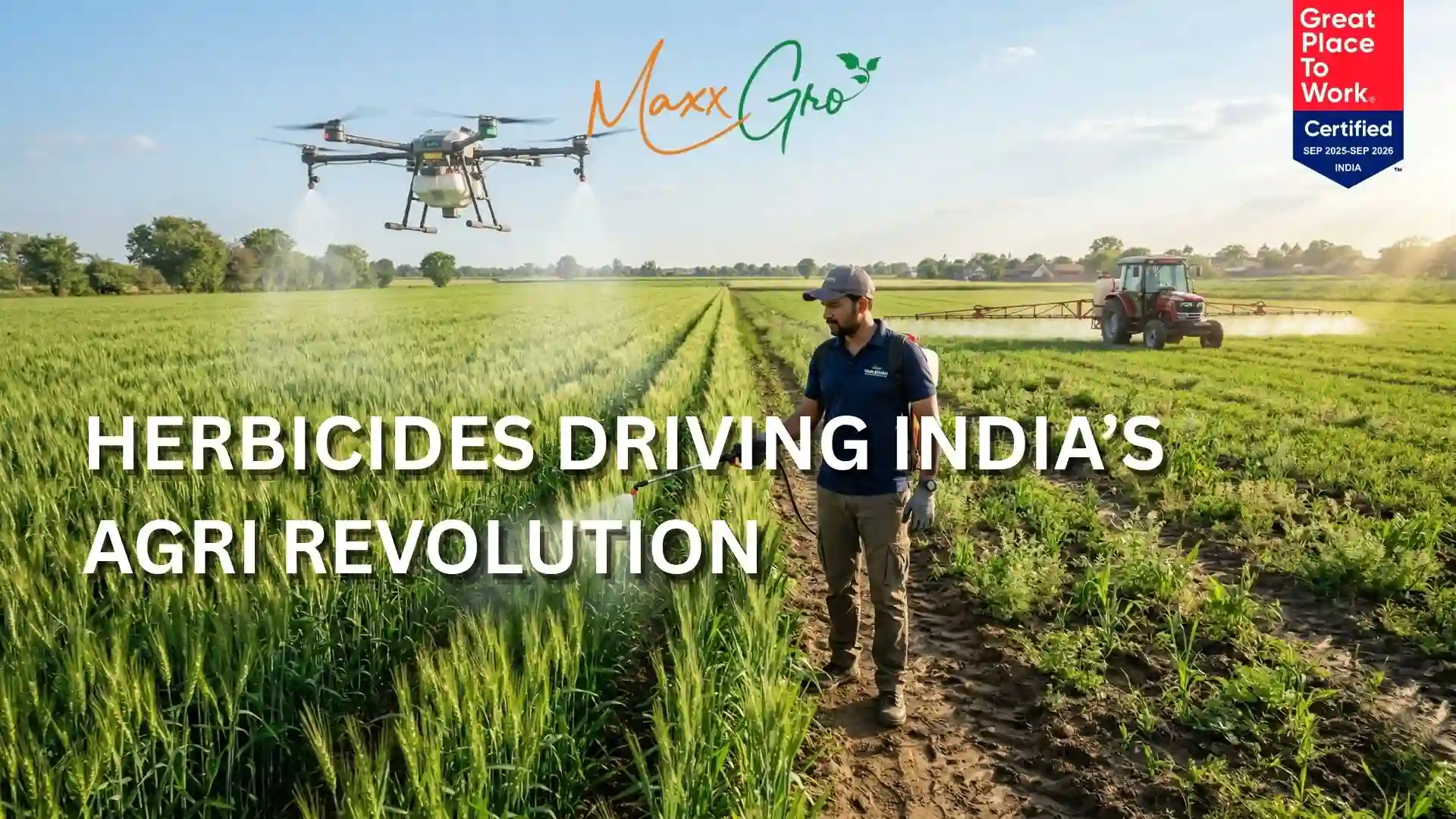
India’s agricultural landscape is undergoing a structural transformation. With increasing pressure to enhance productivity, reduce labor dependency, and optimize farm economics, farmers are rapidly shifting toward smarter crop protection strategies. Among all agrochemical categories, herbicides have emerged as the fastest-growing segment in 2026.
Traditionally, Indian agriculture relied heavily on manual weeding. However, factors such as rising labor costs, workforce shortages, and the demand for higher yields have accelerated the adoption of herbicides across both large-scale and smallholder farming systems.
This blog explores the key drivers behind the rapid growth of herbicides in India, the emerging trends shaping the market, and how innovative solutions are redefining weed management for modern farmers.
Market Overview: Herbicides Leading Agrochemical Growth
The Indian agrochemical industry is projected to grow at a steady pace, but herbicides are outperforming other segments like insecticides and fungicides.
Key Growth Indicators (2026)
- Herbicide segment growth rate: ~10–12% CAGR
- Increasing adoption in rice, wheat, maize, and soybean crops
- Expanding demand in horticulture and plantation farming
- Rising penetration in Tier 2 and rural farming regions
This growth is not incidental—it is driven by deep structural changes in agriculture.
1. Labor Shortage Driving Herbicide Adoption
The Problem
Agriculture in India has historically been labor-intensive. However:
- Migration to urban areas has reduced rural labor availability
- Daily wages for farm labor have increased significantly
- Timely weeding has become difficult for farmers
The Solution: Herbicides
Herbicides offer a cost-effective and time-efficient alternative:
- Reduce dependency on manual labor
- Ensure timely weed control
- Cover large areas quickly
Farmers can now manage weeds with precision and consistency, improving overall crop performance.
2. Need for Higher Crop Productivity
With limited arable land and a growing population, increasing productivity is essential.
Impact of Weeds on Crops
- Weeds compete for nutrients, water, and sunlight
- Can reduce yields by 30–50% if uncontrolled
- Affect crop quality and market value
Role of Herbicides
Modern herbicides:
- Provide selective weed control
- Minimize crop competition
- Improve yield and profitability
This makes herbicides a critical component of high-efficiency farming systems.
3. Shift Toward Mechanized and Smart Farming
India is gradually adopting mechanization and precision agriculture.
Key Trends
- Use of sprayers and automated equipment
- Integration with drone spraying technology
- Adoption of precision agriculture tools
Herbicides Fit Perfectly
Herbicides are:
- Compatible with mechanized spraying
- Efficient in large-scale applications
- Suitable for precision targeting
This alignment with modern farming practices is accelerating their adoption.
4. Rise of Sustainable Weed Management Practices
Sustainability is no longer optional—it’s a necessity.
Challenges with Traditional Methods
- Excessive tillage harms soil health
- Manual weeding is resource-intensive
- Inefficient weed control leads to overuse of inputs
Herbicides as a Sustainable Solution
When used responsibly, herbicides:
- Reduce soil disturbance
- Support conservation agriculture
- Enable no-till farming practices
Modern formulations are designed to be:
- Environmentally safer
- Crop-specific
- Residue-compliant
5. Innovation in Herbicide Formulations
The herbicide market is evolving rapidly due to R&D advancements.
Latest Innovations
- Selective herbicides for specific crops
- Systemic herbicides for deep weed control
- Low-dose, high-efficiency formulations
- Combination products for broader weed spectrum
Benefits for Farmers
- Better control with lower quantities
- Reduced cost per acre
- Enhanced crop safety
Companies like MaxxGro are focusing on advanced formulations that combine efficiency with sustainability.
6. Expansion in Non-Traditional Crop Segments
Earlier, herbicides were mainly used in staple crops. Today, their use is expanding.
New Adoption Areas
- Fruits and vegetables
- Plantation crops
- Cash crops like cotton and sugarcane
- Greenhouse and protected farming
This diversification is significantly contributing to market growth.
7. Government Support and Policy Push
Government initiatives are indirectly supporting herbicide adoption.
Key Drivers
- Promotion of modern farming practices
- Awareness programs for crop protection
- Support for precision agriculture technologies
- Training on safe agrochemical usage
These efforts are increasing farmer awareness and confidence in herbicides.
Challenges in Herbicide Adoption
Despite rapid growth, certain challenges remain:
1. Lack of Awareness
Many farmers are still unfamiliar with:
- Correct dosage
- Application timing
- Crop compatibility
2. Resistance Development
Overuse of the same herbicide can lead to weed resistance.
3. Environmental Concerns
Improper usage may impact:
- Soil health
- Water sources
- Biodiversity
The Way Forward: Smart and Responsible Usage
To sustain growth and ensure long-term benefits:
Best Practices for Farmers
- Use recommended dosage and timing
- Rotate herbicides to prevent resistance
- Combine with integrated weed management (IWM)
- Follow safety guidelines strictly
How MaxxGro Is Supporting Modern Agriculture
At MaxxGro Agrology Limited, the focus is on delivering innovative, efficient, and sustainable crop protection solutions.
What Sets MaxxGro Apart
- Advanced agrochemical formulations
- Farmer-centric product development
- Commitment to sustainability
- Focus on improving farm productivity
By aligning with modern agricultural needs, MaxxGro is empowering farmers to achieve better yields with smarter inputs.
Future Outlook: What to Expect Beyond 2026
The herbicide segment is expected to continue its upward trajectory.
Emerging Trends
- AI-driven crop management
- Drone-based herbicide application
- Bio-herbicides and eco-friendly solutions
- Precision weed mapping technologies
The future of weed management lies in technology integration and sustainability, making herbicides an indispensable tool.
FAQ
Q1. Why are herbicides growing rapidly in India?
Due to labor shortages, rising costs, and the need for higher productivity, farmers are increasingly adopting herbicides.
Q2. Are herbicides safe for crops?
Yes, when used correctly with recommended dosage and timing, herbicides are safe and effective.
Q3. Which crops use herbicides the most in India?
Rice, wheat, maize, soybean, and cotton are major users.
Conclusion
The rapid rise of herbicides in India is not just a trend—it is a reflection of a deeper transformation in agriculture.
Driven by labor shortages, the need for higher productivity, and advancements in farming technology, herbicides have become a cornerstone of modern crop management.
As the industry evolves, the focus must remain on responsible usage, innovation, and sustainability. Companies like MaxxGro are playing a crucial role in shaping this future by delivering solutions that meet the demands of today’s farmers.
Herbicides are no longer just a convenience—they are a necessity for efficient, scalable, and profitable agriculture in India.