
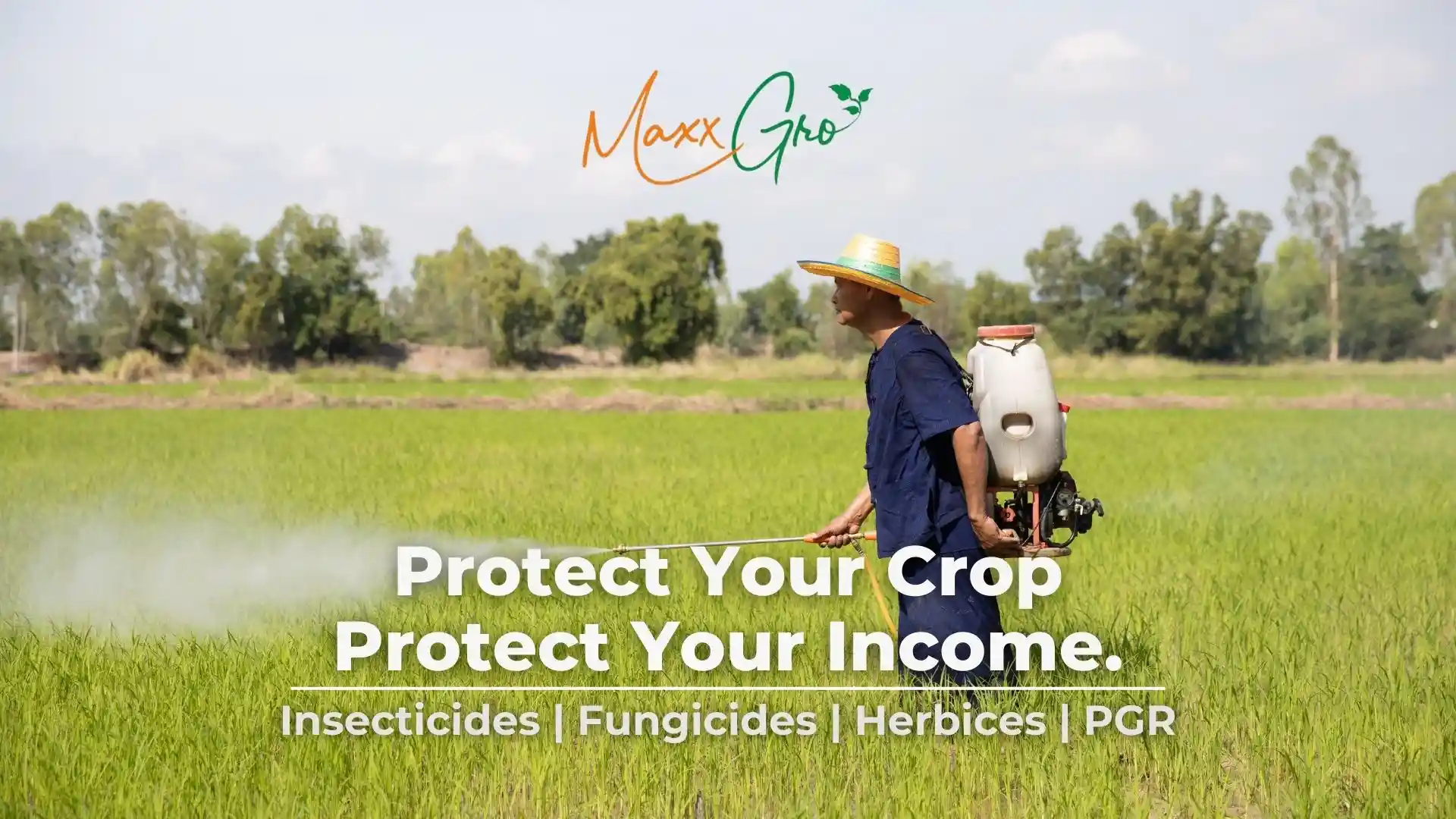
Crop protection services are the backbone of profitable farming — and at Maxxgro, we make them accessible to every Indian farmer through our range of insecticides, fungicides, herbicides, and plant growth regulators (PGR).
At Maxxgro, we provide high-quality agrochemical crop protection products designed specifically for Indian farming conditions. Our range covers the four essential pillars of crop protection: Insecticides, Fungicides, Herbicides, and Plant Growth Regulators (PGR). In this blog, we break down each category so you can make informed decisions for your farm this season.
Why Crop Protection Services Matter
India loses an estimated 15–25% of its total agricultural output every year due to pests, diseases, and weed pressure. For individual farmers, this translates directly into lost income, wasted inputs, and reduced quality of produce. Timely and correct use of agrochemical crop protection products is one of the most powerful tools available to reverse these losses.
Effective crop protection is not about spraying blindly. It is about understanding what is attacking your crop, when to intervene, and which product to use. That is exactly what Maxxgro’s crop protection product range is built for — giving you the right solution at every stage of your crop’s life cycle.
1. Insecticides — Control Pests Before They Damage Your Yield
Insects are among the most destructive threats to any crop. Sucking pests like aphids, whiteflies, and thrips weaken the plant by feeding on its sap, while chewing insects like caterpillars and borers physically destroy leaves, stems, and fruit. Left unchecked, a pest infestation can wipe out an entire field in a matter of days.
Insecticides are agrochemical products formulated to kill or repel insects that damage crops. They work through different modes of action — contact, systemic, or stomach activity — and are available in various formulations including emulsifiable concentrates (EC), wettable powders (WP), granules (GR), and suspension concentrates (SC).
Common Insecticide Categories:
Organophosphates — Broad-spectrum insecticides effective against a wide range of chewing and sucking pests. Commonly used in cotton, paddy, and vegetables.
Pyrethroids — Fast-acting contact insecticides with a quick knockdown effect. Highly effective against caterpillars, pod borers, and leaf-eating insects.
Neonicotinoids — Systemic insecticides that are absorbed into the plant and protect it from within. Particularly effective against sucking pests like whiteflies, aphids, and jassids.
Diamides — A newer generation of insecticides with excellent control over lepidopteran pests such as stem borers, bollworms, and fruit borers, with low toxicity to mammals.
Key Crops and Common Insect Pests:
- Paddy: Stem borer, brown planthopper, gall midge, leaf folder
- Cotton: Bollworm, whitefly, aphid, mealybug, thrips
- Vegetables: Diamond back moth, fruit borer, thrips, mites
- Wheat: Aphids, armyworm, termites
- Soybean: Girdle beetle, semi-looper, stem fly
Pro Tip: Rotate between insecticide classes with different modes of action each season. This prevents pests from developing resistance and keeps your protection program effective year after year.
2. Fungicides — Protect Your Crop from Diseases That Strike Silently
Unlike insect damage which is often visible, fungal diseases can spread silently through a field before most farmers even notice. Diseases like blast in paddy, powdery mildew in wheat, and late blight in tomatoes can cause catastrophic losses in a very short time — especially during humid or wet weather conditions that favour fungal growth.
Fungicides are agrochemical products used to prevent, control, or eliminate fungal infections in crops. They can be applied as foliar sprays, seed treatments, or soil drenches depending on the disease and its stage.
Types of Fungicides:
Protectant Fungicides — Applied before infection occurs, these form a protective barrier on the plant surface. They are best used preventively when disease risk is high due to favourable weather conditions. Examples include mancozeb and copper-based fungicides.
Systemic Fungicides — Absorbed into the plant, these move through the vascular system to protect plant tissues from within. They can cure early infections and provide longer-lasting protection. Examples include triazoles, strobilurins, and benzimidazoles.
Combination Fungicides — Products that blend protectant and systemic modes of action to deliver both preventive and curative activity in a single spray, reducing application frequency and resistance risk.
Major Fungal Diseases by Crop:
- Paddy: Blast (neck and leaf), sheath blight, brown spot, false smut
- Wheat: Yellow rust, brown rust, powdery mildew, loose smut
- Tomato / Potato: Late blight, early blight, leaf mould
- Grapes / Fruits: Downy mildew, powdery mildew, anthracnose
- Cotton: Alternaria leaf spot, root rot, grey mildew
Pro Tip: Begin fungicide applications at the first sign of disease or as a preventive spray before peak disease-risk periods (flowering, humid weather). Seed treatment fungicides are one of the most cost-effective ways to protect crops from soilborne diseases right from germination.
3. Herbicides — Eliminate Weeds That Steal Your Crop’s Nutrients
Weeds are silent thieves. They compete with your crop for water, sunlight, and nutrients — and they often win if left unchecked during the critical early weeks of crop establishment. Studies show that weed competition during the first 30–45 days after sowing can reduce crop yield by 30–50% depending on the crop and weed species.
Herbicides are agrochemical products specifically designed to kill or suppress weeds without harming the crop (when used correctly). They dramatically reduce the need for costly and labour-intensive manual weeding, making them one of the highest ROI inputs in modern farming.
Herbicide Classification:
Pre-Emergence Herbicides — Applied to the soil before weeds germinate. They create a chemical barrier in the top layer of soil that prevents weed seeds from developing into seedlings. Timing is critical — these must be applied to moist soil within 3 days of sowing.
Post-Emergence Herbicides — Applied after weeds have already emerged. These are used to control actively growing weeds at specific growth stages. They may be selective (targeting specific weed types) or non-selective (killing all vegetation).
Selective Herbicides — Kill specific types of weeds (grasses or broadleaf weeds) while leaving the crop unharmed. Essential for use within standing crops.
Non-Selective Herbicides — Kill all plant life and are used for land clearing, bund management, or pre-sowing weed burndown.
Common Weeds and Herbicide Use by Crop:
- Paddy: Echinochloa (barnyard grass), sedges, broadleaf weeds — controlled with bispyribac sodium, pretilachlor, butachlor
- Wheat: Phalaris minor, wild oat, broadleaf weeds — controlled with isoproturon, clodinafop, 2,4-D
- Maize: Grasses and broadleaf weeds — controlled with atrazine, topramezone
- Soybean: Grass and broadleaf weeds — controlled with imazethapyr, pendimethalin
- Cotton: Mixed weed flora — controlled with pendimethalin (pre-emergence), quizalofop (post-emergence)
Pro Tip: Always match the herbicide to the weed type present in your field. Using a grass herbicide when broadleaf weeds dominate — or vice versa — will give you poor results. When in doubt, consult a Maxxgro agrochemical expert before purchase.
4. Plant Growth Regulators (PGR) — Unlock Your Crop’s Full Yield Potential
Most farmers focus only on protecting their crop from pests, diseases, and weeds. But there is a fourth dimension of crop protection and enhancement that is often overlooked — Plant Growth Regulators (PGR). These are agrochemical compounds that influence the physiological processes of a plant to improve its growth, yield, and quality.
PGRs do not provide nutrition. Instead, they work by modifying how the plant grows — stimulating root development, controlling plant height, improving flowering and fruit set, preventing premature fruit drop, and enhancing stress tolerance. When used correctly, PGRs can meaningfully increase both the quantity and quality of your harvest.
Types of Plant Growth Regulators:
Auxins — Promote root development, improve fruit set, and prevent premature fruit drop. Commonly used in fruits and vegetables to enhance uniformity and reduce post-harvest losses.
Cytokinins — Stimulate cell division and promote lateral bud development. Used to improve branching, extend shelf life of leafy vegetables, and enhance fruit development.
Gibberellins — Promote stem elongation, seed germination, and fruit development. Widely used in grapes to improve berry size and bunch quality, and in sugarcane to increase internode length and yield.
Ethylene Regulators — Used to manage ripening and fruit maturation. Ethephon is commonly used in cotton to accelerate boll opening and synchronise harvesting. Ethylene inhibitors like 1-MCP are used in post-harvest storage to extend shelf life.
Growth Retardants — Reduce excessive vegetative growth (lodging) and redirect energy to grain or fruit production. Widely used in wheat and paddy to produce shorter, stronger stems that can support heavy grain heads without falling over.
Key Benefits of PGRs by Crop:
- Paddy & Wheat: Growth retardants reduce lodging and improve grain weight
- Cotton: Ethephon promotes uniform boll opening for easier harvesting
- Grapes: Gibberellin increases berry size, reduces seed count
- Vegetables & Fruits: Auxins and cytokinins improve fruit set and reduce drop
- Sugarcane: Gibberellins increase stalk elongation and juice yield
Pro Tip: PGRs are highly dose-sensitive. Too little gives no effect; too much can stress or damage the crop. Always follow label recommendations and apply at the correct crop growth stage for best results.
How to Build a Complete Crop Protection Program with Agrochemicals
The most effective crop protection approach is not to react to problems after they appear — it is to build a seasonal agrochemical program that protects your crop at every growth stage. Here is how a structured program typically looks:
Stage 1 — Seed Treatment: Before sowing, treat seeds with a registered fungicide and insecticide seed treatment product. This protects the germinating seedling from soilborne diseases and early sucking pests from day one — at minimal cost.
Stage 2 — Pre-Emergence Herbicide: Within 2–3 days of sowing (and before weeds emerge), apply a pre-emergence herbicide to create a weed-free window during the critical crop establishment phase.
Stage 3 — Early Vegetative Stage: Scout the field regularly. Apply a post-emergence herbicide if weed pressure is high. Apply a systemic insecticide if sucking pests like aphids or jassids are detected above threshold levels.
Stage 4 — Active Vegetative to Flowering: This is the highest-risk period for both pest and disease damage. Apply scheduled fungicide sprays to protect against foliar diseases. Continue insecticide applications based on pest scouting results. If appropriate for the crop, apply PGRs at this stage to improve branching, flowering, or control excessive vegetative growth.
Stage 5 — Grain / Fruit Fill to Harvest: Apply a final fungicide spray to protect grain quality. Use PGRs like ethephon where applicable to synchronise maturity and ease harvest. Respect pre-harvest intervals (PHI) for all agrochemical products to ensure food safety compliance.
Important: Always Use Agrochemicals Responsibly
Agrochemicals — insecticides, fungicides, herbicides, and PGRs — are powerful tools that deliver excellent results when used correctly. To protect yourself, your family, your crop, and the environment, always follow these basic guidelines:
- Read the product label fully before mixing or applying
- Use the recommended dose — never exceed it
- Wear appropriate personal protective equipment (PPE) including gloves, mask, and protective clothing
- Spray during early morning or evening to avoid heat and protect pollinators
- Do not spray near water bodies or during rain
- Always observe the Pre-Harvest Interval (PHI) mentioned on the label before harvesting
- Dispose of empty containers safely through approved collection programs
All agrochemical products available at Maxxgro are registered with the Central Insecticides Board & Registration Committee (CIBRC) and comply with Indian regulatory standards.
Frequently Asked Questions About Crop Protection Services
What are crop protection services in agriculture?
Crop protection services refer to the use of agrochemical products — including insecticides, fungicides, herbicides, and plant growth regulators (PGR) — to protect crops from damage caused by insects, fungal diseases, and weeds. These services help farmers reduce yield losses and improve the quality and quantity of their harvest every season.
What is the difference between insecticides, fungicides, and herbicides?
Insecticides are agrochemicals used to kill or control insects and pests that damage crops such as bollworms, aphids, stem borers, and whiteflies. Fungicides are used to prevent or cure fungal diseases like blast, powdery mildew, and blight that attack the leaves, stems, and grains of crops. Herbicides are used to kill or suppress weeds that compete with crops for water, sunlight, and nutrients. Each product targets a different type of threat and must be selected based on the specific problem in your field.
What are Plant Growth Regulators (PGR) and how do they help crops?
Plant Growth Regulators (PGR) are agrochemical compounds that influence the natural growth processes of a plant. They do not provide nutrition but instead modify how the plant grows — improving root development, controlling plant height, enhancing flowering and fruit set, preventing premature fruit drop, and increasing stress tolerance. Common PGRs include auxins, gibberellins, cytokinins, and ethylene regulators. When applied at the correct crop growth stage and dose, PGRs can significantly increase both yield and produce quality.
When should I apply insecticides on my crop?
Insecticides should be applied when pest populations cross the economic threshold level (ETL) — the point at which pest damage will cause greater economic loss than the cost of the spray. Regular field scouting is the best way to monitor pest levels. Early morning or evening application is recommended to ensure better efficacy and to minimise evaporation loss. Always follow the product label for recommended timing, dose, and safety precautions.
Which herbicide should I use for my crop — pre-emergence or post-emergence?
The choice between pre-emergence and post-emergence herbicide depends on the stage of weed development in your field. Pre-emergence herbicides should be applied within 2–3 days of sowing, before weeds germinate, to create a chemical barrier in the soil. Post-emergence herbicides are applied after weeds have already emerged and are actively growing. For best results, identify the dominant weed species in your field and choose a herbicide that is registered and effective against those specific weeds. Maxxgro’s agronomy team can help you select the right product.
Where can I buy quality insecticides, fungicides, herbicides, and PGR products in India?
You can buy a complete range of genuine, CIBRC-registered insecticides, fungicides, herbicides, and plant growth regulators (PGR) at Maxxgro. We offer high-quality agrochemical crop protection products suited to Indian farming conditions, backed by expert agronomy support to help you choose the right product for your crop, pest, and region. Visit maxxgro.in to explore our full product range.
Why Choose Maxxgro for Your Crop Protection Needs?
At Maxxgro, we are committed to providing Indian farmers with genuine, high-quality agrochemical products backed by expert agronomy support. Whether you need a fast-acting insecticide for an active pest outbreak, a reliable fungicide program for your paddy crop, a pre-emergence herbicide to keep your wheat field weed-free, or a PGR to boost your grape yield — we have the right product for you.
Our agrochemical experts understand local crop conditions, prevalent pest and disease pressures, and regional farming calendars. We are here to help you choose the right product, at the right time, in the right dose — so that every rupee you invest in crop protection delivers the maximum return at harvest.
Explore our complete range of insecticides, fungicides, herbicides, and PGRs at maxxgro.in — and give your crop the protection it deserves.
Conclusion
Crop protection is not an optional expense — it is one of the most important investments a farmer can make. With the right agrochemical products — insecticides to control pests, fungicides to prevent diseases, herbicides to manage weeds, and PGRs to optimise plant growth — you can significantly reduce losses and improve the profitability of your farm season after season.
At Maxxgro, we are your trusted partner in crop protection. Browse our product range today or get in touch with our agrochemical experts to build a protection program tailored to your crop and region.